🇨🇭 Quick Overview: Teaching in Switzerland & Salary Standards
Teaching in Switzerland offers some of the highest salaries globally, with international school compensation ranging from CHF 85,000 to CHF 128,000+ per year (~$95,000–$140,000 USD). Licensed teachers with 2+ years of classroom experience and IB or bilingual curriculum familiarity have the strongest hiring path.
Teacher Salaries & Requirements in Switzerland by School Type
| School Type | Typical Annual Salary Range (CHF) | Minimum Requirements | Perks & Housing Benefits |
| International Schools (IB/US/UK) | CHF 85,000 – CHF 128,000+ | Teaching license + 2+ yrs experience (IB preferred) | Relocation allowance, flight support, health insurance |
| Swiss Public Schools | CHF 72,000 – CHF 115,000 | EDK-recognized teaching degree + native/C1 local language | Automatic cantonal pay scale increments, pension |
| Private Language Schools (TEFL/ESL) | CHF 40 – CHF 70 / hour | 120-hr TEFL certification + Bachelor’s degree | Flexible part-time schedules (freelance/contract basis) |
Teach in Switzerland: International School and English Teaching Jobs
Teaching in Switzerland is best suited to licensed teachers who want well-regarded international school roles, strong professional standards, and a high quality of life in one of Europe’s most multilingual countries.
From a Teach Away teacher recruitment perspective, Switzerland is usually a better fit for qualified educators targeting international schools than for first-time TEFL teachers looking for an easy-entry market.
ESL opportunities do exist, especially in private language schools, tutoring, business English, and some specialist institutions, but they tend to be more competitive, less centralized, and more sensitive to work authorization.
Switzerland can be a fantastic destination if you want academic credibility, mountain-and-city lifestyle balance, and access to schools using the International Baccalaureate, bilingual pathways, and other international curricula. It’s less ideal if your main goal is low-barrier entry or aggressive short-term savings on a light qualification profile.
At a Glance
- Average salary: often strong by global standards, but highly variable by canton, school type, and contract; Swiss teacher pay is among Europe’s highest in many contexts, while private ESL work is often hourly or freelance (Eurydice)
- Primary pathway: international schools for licensed teachers, with ESL/private language teaching as a secondary path (edk.ch)
- Top benefit: excellent quality of life, strong infrastructure, and access to multilingual, globally minded school communities (About Switzerland)
- Main requirement: a strong teaching profile and, in many cases, employer-backed work authorization; public-school teaching may also require diploma recognition through the EDK
Is Teaching in Switzerland Right for You?
Teaching in Switzerland is the premier choice for licensed educators who value professional prestige, a multilingual environment, and the highest teacher salaries in Europe. Switzerland is a highly regulated destination that favors subject-specialists and those with International Baccalaureate (IB) experience.
You’re likely a strong fit if you:
- hold a teaching license and classroom experience
- want international school roles with IB, AP, bilingual, British, or American-style programs
- are comfortable living in a country where the local language environment may be German, French, or Italian depending on the canton
- value quality of life, safety, public transport, and outdoor living as much as salary (zis.ch)
Switzerland may be a weaker fit if you:
- want a simple first TEFL job with easy visa access
- need employer-provided housing to make the move work
- are focused mainly on maximizing savings without a premium school package
- aren’t prepared for a market where schools may prefer candidates already in Europe or already authorized to work in Switzerland (e-tas.ch)
What are the requirements for teaching jobs in Switzerland?
- Bachelor’s Degree: Usually required
- Teaching License: Strongly preferred or required for most international school roles
- TEFL Certification: Helpful to essential for many ESL and private language roles
- Experience: Often preferred, and commonly required for better school packages
- Visa Sponsorship: Possible, but not guaranteed; much easier with an employer offer and a strong candidate profile (edk.ch)
Types of Teaching Jobs in Switzerland
The Swiss teaching market is segmented by language regions (Cantons) and school types, with the International School sector serving as the primary entry point for non-EU educators.
International Schools: These are the most stable pathways, concentrated in Zurich, Geneva, and Zug. They prioritize teachers with at least 2 years of experience and IB/AP familiarity.
Private Language Schools (ESL): Primarily focused on Business English in hubs like Basel or Lausanne. These roles are often freelance or “hourly,” requiring a proactive, portfolio-style approach to income.
Public Schools (Volksschule): Highly lucrative but difficult to access. These roles require EDK Recognition (diploma equivalence) and C1-level proficiency in the Canton’s local language (German, French, or Italian).
International schools
International schools are usually the best-paid and most stable option for foreign teachers in Switzerland. Many serve international and local families, and common curriculum pathways include the International Baccalaureate, bilingual English-German programs, AP, and other internationally recognized secondary programs. (International School of Zug and Luzern)
These roles are best for:
- licensed teachers
- candidates with 2+ years of classroom experience
- teachers with IB, AP, bilingual, British, or American curriculum familiarity
- educators who want a full-school environment rather than pieced-together freelance hours
In Switzerland, one useful local nuance is that even international schools often take host-country integration seriously. Some schools explicitly build German into student life or run bilingual pathways, so candidates who understand the value of local-language inclusion can stand out. (zis.ch)
Browse current opportunities on Teach Away’s Switzerland job board or explore international schools in Switzerland.
ESL and private language schools
ESL teaching in Switzerland is real, but it should be positioned honestly: this is not a high-volume entry market like South Korea, Japan, or Taiwan. The English language teaching market is often freelance, short-notice, and spread across private language schools, exam prep, tutoring, business English, and specialist institutions. Full-time positions do exist, but they’re less common and often go to stronger or more locally established candidates.
These roles are best for:
- teachers with a TEFL certification or the 150-hour Teach Away TEFL course
- teachers with prior ESL experience
- EU/EFTA citizens or candidates who already have work rights
- teachers open to part-time or portfolio-style work across multiple clients or schools (e-tas.ch)
Public schools
Swiss public schools are excellent, but they are not usually the easiest entry point for foreign teachers. Public education is organized largely at the cantonal level, and teaching in the state system may require recognition of foreign diplomas through the EDK, appropriate language competence, and alignment with the local school system. (edk.ch)
For most international applicants, public-school teaching is a specialist path rather than the default route.
Universities, hotel schools, and specialist institutions
More qualified or niche-profile candidates may also find opportunities in higher education, hospitality schools, boarding schools, executive English training, or private tutoring. Switzerland’s hospitality sector and multilingual business environment can create interesting English teaching demand, but these roles vary widely in stability and package quality. (TEFL Institute)
Salary, Benefits, and Savings Potential
A primary school teacher in Switzerland can earn a gross annual salary between 85,000 CHF and 110,000 CHF, making it the most lucrative teaching market in the Western world.
The Savings Equation: While the “headline” salary is high, the cost of living is approximately 50-70% higher than in the UK or US.
Mandatory Deductions: Teachers should budget for mandatory private health insurance (KVG) and the Swiss three-pillar pension system.
Lohnrechner Tool: Teachers are encouraged to use official cantonal salary calculators to see specific net income after taxes.
A teacher in Switzerland can realistically save 15–20% of their salary, provided they live outside of expensive city centers like Zurich or Geneva.
- International schools generally offer the most attractive overall packages for foreign hires
- Public schools can pay very well, but they are harder for overseas candidates to access
- Private language schools and freelance ESL can work, but they usually require more caution around hours, benefits, and long-term income predictability (Eurydice)
Compared with nearby France or Italy, Switzerland often offers stronger salary potential and cleaner infrastructure, but it also comes with much higher day-to-day costs. Compared with Gulf destinations, Switzerland may offer more lifestyle appeal and easier regional travel, but often less employer-covered housing, which changes the savings equation. This is why contract quality matters so much here. (About Switzerland)
Common benefits
Benefits vary widely by school, but may include:
- pension or social contributions according to Swiss employment rules
- paid vacation aligned to school calendars
- professional development
- partial relocation support in stronger international school packages
- health insurance access, though Swiss health costs are usually not framed the same way as employer medical coverage in some overseas markets (ch.ch)
Ready to compare real opportunities? Create a free profile through Teach Away to browse Switzerland roles and apply with a stronger candidate profile.
What is the cost of living vs. teaching salary in Switzerland?
Switzerland is one of the most expensive places in Europe to live, and housing is a major part of that equation. Unlike many Gulf or East Asian teaching packages, accommodation is often not fully provided, so rent, transport, food, and insurance need to be factored into every job decision from the start. (About Switzerland)
This means two candidates with the same salary can have very different experiences depending on:
- the city or canton
- whether housing support is included
- whether they’re single, supporting a family, or sharing costs
- whether they’re in a stable school contract or piecing together freelance language teaching (e-tas.ch)
For many teachers, Switzerland feels financially strongest when:
- the job is with an international school
- the salary is paired with a more comprehensive benefits package
- your spending is disciplined
- you understand the local cost structure before signing
How to Get a Teaching Job in Switzerland
The most practical way to get hired in Switzerland is to match your profile to the right school type early, then apply through trusted channels with a strong, document-ready application. Switzerland rewards fit and credibility more than volume applications. (State Secretariat for Economic Affairs)
A strong Teach Away pathway looks like this:
1. Choose the right route
Start by deciding whether you’re better suited to:
- international schools as a licensed teacher
- private language schools or ESL roles as a TEFL-qualified candidate
- a longer-term route that starts with certification before targeting Switzerland more seriously
If you want access to stronger international school roles, becoming a licensed teacher can materially improve your chances. Teach Away’s teacher certification pathway is worth considering if you’re trying to move from ESL into licensed K-12 teaching.
2. Build a Switzerland-ready application
Your CV should highlight:
- curriculum familiarity such as IB, AP, Cambridge, British, or American programs
- multilingual or international classroom experience
- safeguarding, differentiation, and parent communication
- work authorization status if relevant
- measurable student outcomes and extracurricular involvement
3. Strengthen your qualifications where needed
For ESL routes, a recognized TEFL course can be a direct credibility bridge. If you need to qualify for more language-school or entry ESL roles, Teach Away’s TEFL certification or 150-hour online TEFL course can help you meet common baseline expectations more confidently.
4. Apply early and selectively
International schools often recruit ahead of the next academic year, while private language schools may hire more flexibly throughout the year. Good Swiss roles are competitive, so quality applications matter more than mass outreach.
5. Use vetted job channels
Use Teach Away to browse teaching jobs in Switzerland, explore Swiss schools hiring now, and create your free teacher account. Teach Away is especially useful when you want a clearer route into established schools rather than trying to decode the market from scratch.
What You Need to Teach in Switzerland
What you need to teach in Switzerland depends on the pathway, but stronger qualifications open far more doors. In most cases, Switzerland rewards teachers who are already well prepared rather than teachers hoping to qualify after arrival.
For international schools
Most international schools prefer or require:
- a bachelor’s degree
- a valid teaching license
- relevant classroom experience
- familiarity with international curricula such as IB, AP, bilingual, British, or American frameworks
- strong references and safeguarding awareness (International School of Zug and Luzern)
For ESL and private language schools
Common expectations include:
- a bachelor’s degree
- a TEFL certification, often 120 hours or more
- prior ESL teaching experience for stronger roles
- flexibility around part-time or mixed-hour schedules
For Swiss public schools
Public-school teachers may need:
- a recognized teaching diploma
- appropriate language proficiency for the canton and school level
- recognition of foreign qualifications through the EDK
- alignment with local teaching-stage requirements
If you’re not yet qualified for your ideal Swiss role, the clearest bridge is usually one of two things:
- earn a TEFL certification for private language/ESL pathways
- pursue teacher certification if your real goal is international school teaching
Visas for Teachers in Switzerland
For non-EU/EFTA citizens (Third-Country nationals), teaching in Switzerland requires a B or L Work Permit, which is subject to strict annual quotas and employer-proven necessity.
The Priority Rule: Swiss law requires employers to prove they could not find a suitable candidate within Switzerland or the EU before hiring from the US, Canada, or Australia.
EDK Recognition: To teach in state-subsidized schools, you must have your foreign diploma “recognized” by the EDK. This process can take 4–6 months and costs approximately 550–800 CHF.
To teach in Switzerland, you generally need an employer-backed right to work, and the difficulty depends heavily on your nationality. EU/EFTA citizens benefit from freer movement rules, while non-EU/EFTA nationals usually face a more restrictive process and are expected to be highly qualified. In practice, this means school sponsorship and candidate quality matter a lot.
What to expect
For many teachers, the process includes:
- securing a job offer first
- having the employer initiate or support the work authorization process
- obtaining the relevant residence/work permit after approval
- registering with the local commune if staying longer term
Practical visa realities
A very important Switzerland-specific reality is that non-EU/EFTA nationals are not competing in an open market. Switzerland limits admissions for third-country nationals and expects these hires to be in the broader economic interest, which is one reason schools may favor especially qualified candidates or those with more specialized profiles. (State Secretariat for Economic Affairs)
Typical documents
Exact requirements vary, but schools and immigration authorities may ask for:
- passport
- signed employment contract
- degree certificates
- teaching license or TEFL certificate, depending on role
- police clearance
- CV
- proof of accommodation or local registration steps
- diploma recognition evidence where relevant (SBFI)
Official starting points
For official guidance, candidates should check:
- Switzerland’s official work guidance on ch.ch and SEM
- EDK guidance for foreign diploma recognition
- the relevant Swiss embassy or consulate for their country of residence (ch.ch)
Useful official visa and entry references:
- Switzerland work and permit guidance
- State Secretariat for Migration: working in Switzerland
- EDK foreign diploma recognition
- Swiss Embassy in the United States
- Swiss Embassy in Canada
- UK guidance for work travel to Switzerland (Federal Department of Foreign Affairs)
Best Cities or Regions for Teaching
Major hiring hubs are concentrated in the “Golden Triangle” of Zurich, Geneva, and Basel, where the density of multinational corporations drives demand for English-medium education.
Zurich & Zug: The financial heartland. Highest salaries and strongest concentration of American and IB schools.
Geneva & Vaud: The diplomatic hub. Ideal for teachers seeking a French-speaking lifestyle and UN-adjacent international schools.
Basel: The pharmaceutical center. Strong demand for subject-specialist teachers (Science/Math) and Business English tutors.
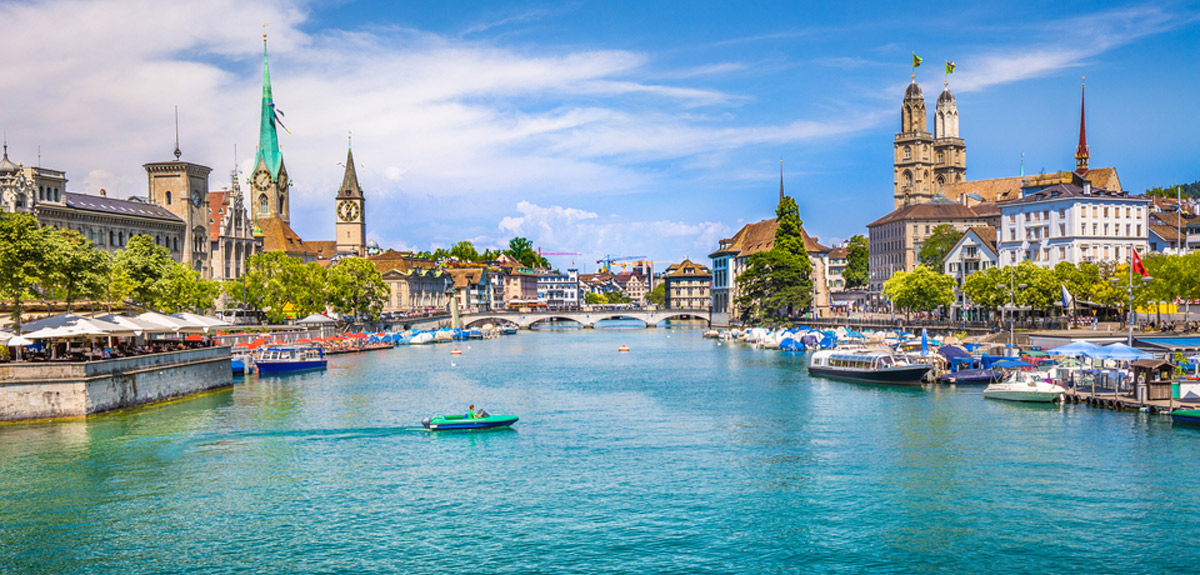
Zurich
Zurich is a strong choice for teachers who want a major international city, strong transport links, and access to established international schools. It suits candidates comfortable with a high-cost urban market and a German-speaking environment. (Kanton Zürich)
Geneva
Geneva is especially attractive for internationally minded teachers because of its diplomatic and multicultural environment. It can be a strong fit for teachers who value global communities and family-facing international schools. (World Schools)
Zug and Luzern
These areas can appeal to teachers who want a slightly smaller-scale environment while still accessing well-established international schools and strong family communities. (International School of Zug and Luzern)
Basel and Vaud
Basel offers international school opportunities in a well-connected region, while parts of Vaud and the Lake Geneva area can combine lifestyle appeal with access to private and international institutions. (isbasel.ch)
What It’s Actually Like Teaching There
Teaching in Switzerland often feels structured, professional, and multilingual. Expectations are usually high, school systems are well organized, and communication can be more direct and detail-oriented than in some looser overseas teaching markets.
In international schools, teachers often work with globally mobile families who expect strong academics, thoughtful communication, and a polished school experience. In bilingual or host-country-aware environments, there may also be an expectation that students connect meaningfully with local language and culture, even if English is the primary language of instruction.
Common teaching norms include:
- well-prepared lessons and clear professional boundaries
- strong parent communication
- attention to student wellbeing and inclusion
- respect for multilingualism and local identity
- high expectations around reliability and organization
One local nuance worth understanding is that “Switzerland” is not culturally identical everywhere. The classroom feel in a German-speaking canton can differ from that in Geneva or Ticino, and language-region awareness matters in ways some international applicants underestimate.
Can You Save Money?
Yes, you can save money in Switzerland, but not automatically. Switzerland is not a destination where a high salary alone guarantees savings, because rent, insurance, food, and everyday costs are all significant. The strongest savings potential usually comes from international school contracts with solid salaries and good overall packages.
You’re more likely to save if:
- you work in an international school rather than hourly freelance ESL
- your contract includes meaningful benefits
- you avoid the most expensive housing setups
- you manage lifestyle inflation carefully
If your priority is the absolute highest chance of saving money fast, some Gulf markets may still outperform Switzerland on a package basis because of tax and housing structures. But if your priority is balancing career quality, Europe-based lifestyle, and long-term professional credibility, Switzerland can be a very strong choice. (State Secretariat for Economic Affairs)
Things to Do, Lifestyle, and Cultural Appeal
Living in Switzerland offers a rare mix of urban convenience and outdoor access. Teachers are drawn to the country for its clean cities, efficient trains, multilingual culture, lake-and-mountain weekends, and easy travel to neighboring countries.
Switzerland has four national languages, and that multilingual identity shapes daily life in meaningful ways. Even teachers working mainly in English-speaking school environments are likely to feel the value of local language awareness in community life, administration, and travel.
Lifestyle highlights often include:
- hiking, skiing, and lake access
- safe, well-run cities
- strong public transport
- easy cross-border travel to France, Germany, Italy, and Austria
- a globally connected but locally rooted culture
Compared with some more nightlife-driven teaching hubs, Switzerland often appeals more to teachers who want nature, order, and quality-of-life depth than nonstop expat-party energy.
FAQs About Teaching in Switzerland
Can foreigners teach in Switzerland?
Yes, but the route depends heavily on your nationality, qualifications, and school type. International schools are usually the most accessible path for qualified foreign teachers, while public schools are more regulated and may require diploma recognition through the EDK. Non-EU/EFTA nationals generally face stricter work authorization rules.
Do you need a teaching license to teach in Switzerland?
Usually yes for the strongest international school roles, and often yes or equivalent recognition for public-school pathways. For some private language school and ESL roles, a TEFL certificate may be more relevant than a full K-12 teaching license.
Is Switzerland good for TEFL teachers?
Switzerland can be good for TEFL teachers, but mostly for candidates with a strong profile, flexible expectations, or existing work rights. It is not one of the easiest first-time TEFL destinations because jobs are competitive and the ESL market is often freelance or piecemeal.
What language do you need to teach in Switzerland?
That depends on the school. Many international schools teach in English, but local language awareness can still help, especially in bilingual schools or daily life. Public-school roles are more likely to require the language of the canton and formal recognition of qualifications.
Are teaching jobs in Switzerland available year-round?
Some hiring happens throughout the year, especially in private or specialist settings, but many stronger school-based roles follow academic recruitment cycles and are filled well before the school year starts. Applying early is smart.
Start Teaching in Switzerland
Switzerland is one of Europe’s most rewarding teaching destinations for the right candidate: especially licensed teachers seeking international school roles, or well-qualified ESL teachers who understand the realities of this market. It offers prestige, quality of life, and strong professional environments, but it rewards preparation, credibility, and fit. (International School of Zug and Luzern)
If Switzerland sounds like the right next step, start by building the strongest version of your profile:
- browse current teaching jobs in Switzerland
- create your free Teach Away account
- explore schools in Switzerland hiring through Teach Away
- earn a TEFL certification if you’re targeting ESL roles
- pursue teacher certification if your long-term goal is international school teaching
Want to understand what makes a strong overseas teaching application before you apply? Teach Away’s teacher resources and blog are a good next step.
Teachers in Switzerland earn between CHF 72,000 and CHF 128,000+ annually depending on experience, canton, and school type. International school teachers typically earn between CHF 85,000 and CHF 128,000 per year.
Yes. Foreign-licensed teachers can teach at international schools in Switzerland if they hold a valid teaching credential, a Bachelor’s degree, and at least two years of full-time teaching experience.
A 120-hour TEFL certification is required for teaching positions at private language institutes, adult language schools, and business English training centers in Switzerland.Do I need a TEFL certificate to teach English in Switzerland?
Switzerland at a glance
Country information
Capital: Bern
Language: German, French, Italian, Romansch
Population: 8,341,000
Currency: Swiss franc
Government: Federal multi-party directorial republic
Major religion: Christian
Climate: Temperate but varies with altitude
Quick facts
In 2015, Switzerland was ranked the world’s happiest country
Switzerland is home to over 450 varieties of cheese
There are more than 1500 lakes in Switzerland, owning 6% of Europe’s freshwater.